Vixon Refuses Responsibility for Zhara's Pregnancy
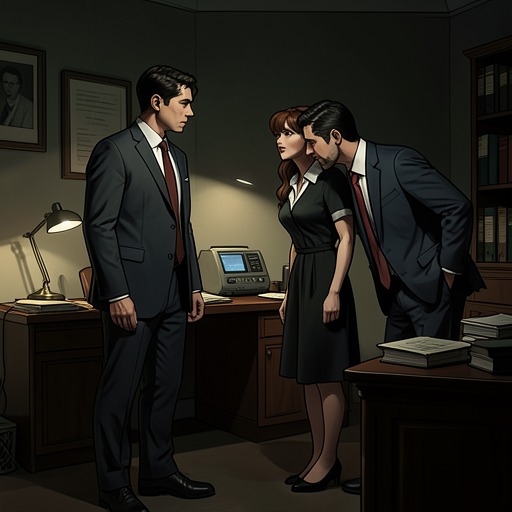
The Beki CEO Got Me PregnantVixon Refuses Responsibility for Zhara's Pregnancy marks the moment when an unexpected pregnancy becomes an open ethical and interpersonal conflict. Zhara tells Vixon that she is pregnant and that he is the father, but instead of responding to her vulnerability, he denies concern, blames her, orders her to seek other possible partners, and walks away while she cries after him. The episode establishes refusal—not uncertainty—as Vixon's chosen response to responsibility, and it helps define the destructive conduct that later leads to his removal from the workplace and imprisonment.
Causes and Background
The confrontation follows a sexual encounter between Vixon and Zhara at the office. After several weeks, Zhara buys a pregnancy test because she experiences signs of pregnancy; the result is positive. She and Vixon are absent from work together because she has told him that she is pregnant and expects him to accept responsibility. Her expectation is not presented as an abstract demand: she identifies him as the father and asks him directly to stand behind her and the pregnancy.
Zhara's account later makes the sequence explicit. She says that something happened between them in the office, that she purchased a pregnancy test after noticing pregnancy symptoms, and that she informed Vixon when the result was positive. The absence that had appeared as a shared response to a private crisis therefore becomes evidence of a failed attempt to secure his cooperation. Vixon's response turns what might have been a difficult conversation into a rejection of both the pregnancy and Zhara's claim to recognition.
The Refusal
In Vixon Rae's point of view, the news produces anger rather than care. He reacts with the thought that he has gotten Zhara pregnant and complains that she summoned him to her house to reveal it. When Zhara tells him, "B-buntis ako, Vixon... I-Ikaw ang ama... ", he immediately challenges her, saying, "Wala akong pake! Sabi mo nag birth control ka?!" His response shifts the burden onto her alleged promise of birth control instead of addressing the shared circumstances of the sexual encounter.
Zhara explains that she said she was using birth control only because she feared he would stop what they were doing and leave her unsatisfied. Vixon treats that explanation as proof that the entire consequence is her fault. He then escalates from accusation to abandonment, telling her, "Bahala ka! Wala akong pake diyan sa dinadala mo! Baka may iba kang katalik, puntahan mo sila tas sabihin mo nabuntis ka nila!" The statement rejects the pregnancy, insults Zhara's sexual credibility, and refuses even the minimum acknowledgment of a possible paternal obligation.
Zhara does not silently accept the dismissal. Crying, she calls after him, "P-panagutan mo ako, V-Vixon!" Her plea gives the scene its central confrontation: she asks for accountability, while he interprets accountability as an intolerable imposition. Vixon leaves anyway and contemptuously characterizes her pursuit as following him like a dog. The physical movement away from the house thus completes the moral movement of the scene: he does not merely disagree with Zhara; he tries to escape the relation she has named.
Consequences in the Workplace
The refusal becomes part of a wider pattern of Vixon's conduct. When Zhara later explains the incident to Yohan, she says that Vixon cursed at her and drove her away after she told him she was pregnant. Her testimony places the private rejection inside the office's power structure, where Vixon is not only an alleged father but also an employee whose treatment of a colleague can be judged by Yohan.
Yohan's response is sharpened by his own conflicts with Vixon. In another confrontation, Yohan condemns Xan's insulting behavior toward Kazumi and warns that he has noticed arrogance concealed beneath performed kindness. Against that background, Vixon's treatment of Zhara contributes to a portrait of manipulation and cruelty rather than an isolated failure of communication. Yohan eventually instructs that Vixon be fired after learning that Vixon has attacked Kazumi and caused her serious bleeding. The order does not erase the earlier pregnancy dispute, but it places Vixon's refusal within the same escalating pattern of harm.
The institutional consequences become concrete when Yohan learns that his workers have called the police and that Vixon has been imprisoned for two years. The arrest follows the broader violence surrounding Vixon, while the pregnancy refusal remains one of the clearest earlier demonstrations of his willingness to deny another person's claim to protection. His rejection of Zhara is therefore both a personal abandonment and an early sign of conduct that will eventually bring him under formal authority.
Contrast with Responsibility
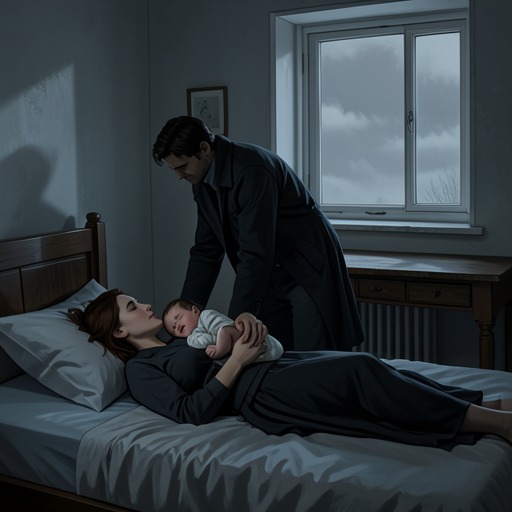
The episode gains additional force through its contrast with Yohan's response to Kazumi's pregnancy. When Kazumi becomes pregnant after an intoxicated encounter in which no condom was used, she fears that Yohan may reject her because he is angry and has misunderstood her. Yet when the pregnancy is confirmed by two lines on a pregnancy test, Yohan tells her, "Pananagutan kita," and asks her to live in his house for the time being. The same narrative world therefore presents two opposing responses to unexpected parenthood: Yohan moves toward protection, while Vixon moves toward denial.
That contrast is not limited to declarations. During Kazumi's later medical crisis, Yohan worries about her and the baby, accepts the doctor's reassurance that the baby is strong, receives medication and vitamins for her care, and is told to prevent her from moving too much. At the birth, he remains present through the doctor's final instruction to push, receives the newborn, and listens as the nurse describes breastfeeding, vitamin K, eye drops, measurements, footprints, screening tests, pediatric examination, and the first bath. His later participation in care makes Vixon's earlier refusal appear even more deliberate: responsibility is difficult in this story, but it is shown as a choice that can be accepted rather than evaded.
Narrative Significance
Vixon Refuses Responsibility for Zhara's Pregnancy converts pregnancy from a private biological fact into a test of recognition, power, and obligation. Zhara's positive test creates a relation that Vixon cannot control through denial, yet he attempts to control the narrative by blaming her, questioning her fidelity, and refusing to hear her demand. Her crying pursuit makes the emotional force of the refusal visible before any legal or institutional consequence arrives.
The event also foreshadows the later collapse of Vixon's position. His contempt for Zhara's claim is followed by exposure of his behavior, the loss of his employment, police involvement, and imprisonment. Later, when police state that someone tried to kill Kazumi, the story's treatment of Vixon has moved from private accusation to criminal danger. The pregnancy refusal is not itself the final punishment, but it is a crucial early disclosure of the attitude that makes his later downfall legible: he repeatedly treats other people's fear, bodily vulnerability, and demands for accountability as obstacles to be silenced rather than claims requiring response.